

The problem: WiFi drops every time you wake the phone
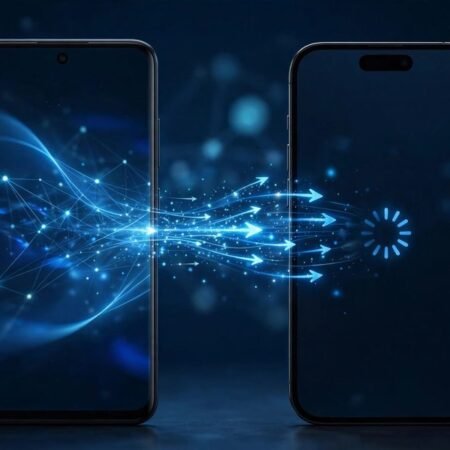
Unlock your iPhone 17 and the WiFi icon is gone. You watch it reconnect, sometimes instantly, sometimes after a painful five seconds of spinning. Lock the phone, unlock it again, and the same thing happens. If this loop sounds familiar, you are not alone: a 42 reply Apple Community thread and a wave of Reddit posts have filled up with iPhone 17 owners reporting exactly this, and the pattern is too consistent to be a coincidence. The common thread is the N1 chip, Apple's new in-house wireless chip that powers Wi-Fi, Bluetooth, and Thread on the iPhone 17 lineup, including the iPhone Air. The N1 is Apple's first Wi-Fi 7 radio, and its aggressive power management plus new Wi-Fi 7 negotiation behavior appears to clash with certain routers, privacy settings, and VPN setups, dropping the connection every time the phone wakes from sleep.
Quick Answer
The iPhone 17 WiFi drop on unlock is most likely caused by the N1 chip's aggressive sleep behavior, Wi-Fi 7 negotiation failing on older routers, Private Wi-Fi Address rotation, or a VPN/profile interfering. The fastest fixes are: set Private Wi-Fi Address to Fixed for your home network, turn off Wi-Fi Assist and Limit IP Address Tracking, disable your VPN temporarily, and if you have a Wi-Fi 7 router, try forcing it to Wi-Fi 6 mode. One of these resolves the issue for the vast majority of people.
How to tell what is actually causing your drops
Before you start changing settings, spend two minutes diagnosing. The fix that works depends on the pattern, and this table will save you from trying things at random.
| Symptom pattern | Most likely cause | Jump to fix |
|---|---|---|
| Drops only on your home WiFi, fine elsewhere | Router negotiation (Wi-Fi 7) or router setting | Fix 6 |
| Drops everywhere, any network | iPhone setting or VPN/profile issue | Fix 2, 3, 5 |
| Reconnects within 2 to 3 seconds | Normal N1 sleep behavior, annoying but not broken | Fix 1, 7 |
| Takes 10+ seconds or needs manual reconnect | Failed DHCP/negotiation or profile conflict | Fix 4, 6, 8 |
| Started right after installing a VPN or work profile | VPN or configuration profile | Fix 5 |
| Happens only when battery is low or Low Power Mode is on | Aggressive radio power saving | Fix 7 |
The Apple Community thread consistently shows the "fine everywhere except my home network" pattern, which points squarely at the N1 chip negotiating Wi-Fi 7 with routers that handle the new 802.11be protocol poorly. If that describes you, Fix 6 is where the real answer lives.
Fix 1: Set Private Wi-Fi Address to Fixed on your home network
Private Wi-Fi Address is Apple's MAC randomization feature, and on the N1 chip it behaves more aggressively than on older iPhones. Every time the phone sleeps and wakes, it can present a different randomized MAC address to your router. Many routers treat this as a brand new device, which means a fresh DHCP handshake, fresh authentication, and sometimes a short ban or delay while the router figures out what happened. That is your drop.
The fix is not to turn the privacy feature off entirely. Instead, tell the iPhone to use one consistent randomized address for your home network:
- Open Settings > Wi-Fi.
- Tap the blue (i) info button next to your home network.
- Find Private Wi-Fi Address and change it from Rotating to Fixed.
- Rejoin the network if prompted.
You keep a randomized address (your real MAC is still hidden), but it stays the same across sleep cycles, so the router recognizes the phone instantly on wake. On public networks like coffee shops and airports, leave it on Rotating, that is where the privacy protection actually matters.
Fix 2: Turn off Wi-Fi Assist and Limit IP Address Tracking
Wi-Fi Assist automatically switches you to cellular data when the WiFi connection is weak. On the N1 chip, the brief negotiation window after unlock can look like "weak WiFi" to this feature, so the phone drops WiFi in favor of cellular even though the network is fine.
- Go to Settings > Cellular (or Settings > Mobile Data).
- Scroll to the bottom and toggle Wi-Fi Assist off.
While you are at it, disable Limit IP Address Tracking for your home network, since it forces traffic through an extra relay layer that can delay the post wake handshake:
- Go to Settings > Wi-Fi, tap the (i) next to your network.
- Toggle Limit IP Address Tracking off.
Both of these are safe to disable on a trusted home network. You are not exposing yourself; you are just removing two layers of indirection that get in the way during the two seconds the N1 chip is re establishing its connection.
Fix 3: Disable your VPN, then test
This is the big one for anyone who installed a VPN app or has a work profile. Many VPN apps on iOS 26 use on demand rules that tear down and rebuild the tunnel every time the network interface changes state, and the N1 chip changes interface state on every lock/unlock cycle. The result: unlock, VPN tears down, WiFi appears to drop while the tunnel rebuilds.
Test it properly:
- Go to Settings > General > VPN & Device Management > VPN and toggle the VPN off at the system level.
- Lock and unlock the phone five times over a few minutes and watch whether the drops stop.
If the drops stop, your VPN app is the trigger. You have three options: leave the VPN off on trusted home WiFi and use it only on public networks, switch to a VPN provider with better iOS 26 support, or check the app's settings for an "on demand" option and restrict it to cellular only.
Also check Settings > General > VPN & Device Management for any configuration profiles from an employer or school. Stale profiles with WiFi payloads can fight the N1 chip's own negotiation. Remove anything you no longer need.
Fix 4: Forget the network and rejoin fresh
If the phone has been struggling with a network for weeks, its saved configuration may contain a half broken handshake state, a stale DHCP lease, or a cached authentication token that no longer matches what the router expects. A clean rejoin wipes all of that.
- Go to Settings > Wi-Fi, tap the (i) next to your network.
- Tap Forget This Network and confirm.
- Restart the iPhone (hold the side button and a volume button, slide to power off, then power back on).
- Rejoin the network and enter the password fresh.
Do this after Fix 1, not before, so that the fresh join happens with your new Fixed private address setting. And resist the temptation to restore network settings from a backup if the problem returns; a fresh join is the whole point.
Fix 5: Check WiFi Calling and router level MAC filtering
Two less obvious culprits live on opposite ends of the connection. First, WiFi Calling on iOS 26 registers with your carrier over the WiFi link, and on some carriers that registration cycle interferes with the N1's wake handshake. Try turning it off temporarily at Settings > Cellular > Wi-Fi Calling and test for a day.
Second, if your router has MAC address filtering or a device limit enabled, the rotating private address from Fix 1's default behavior may have filled the router's allowlist with ghost entries, or the router may be refusing the "new" device. Log into your router's admin page and:
- Check for MAC filtering and either disable it or add your phone's current private address to the allowlist.
- Look for a device connection limit and raise it if it is set low.
- Delete stale/ghost entries for your iPhone if you see several.
Fix 6: Tame Wi-Fi 7 on your router (the N1 specific fix)
This is the fix that matches the N1 chip angle most directly. The iPhone 17's N1 chip is a Wi-Fi 7 (802.11be) radio. When it wakes from sleep, it tries to negotiate a Wi-Fi 7 connection with your router. If your router advertises Wi-Fi 7 support but implements it badly, which is common on early Wi-Fi 7 routers and on Wi-Fi 6 routers with buggy firmware, the negotiation fails and the connection drops instead of gracefully falling back to Wi-Fi 6.
You have three router side options, easiest first:
Option A: Force the router's 5 GHz band to Wi-Fi 6 (802.11ax) mode. Log into your router admin panel, find the wireless settings for the 5 GHz band, and change the mode from "Wi-Fi 7 / 802.11be" or "Auto" to "Wi-Fi 6 / 802.11ax". You lose theoretical Wi-Fi 7 top speed, but in practice you will never notice the difference on a phone, and the drops disappear because the N1 negotiates a protocol your router actually handles well.
Option B: Disable 320 MHz channel width. Wi-Fi 7's headline feature is 320 MHz wide channels, and this is the single most failure prone part of the negotiation. In your router's 5 GHz settings, set channel width to 160 MHz or 80 MHz. This keeps Wi-Fi 7 enabled but removes the part that breaks.
Option C: Update the router firmware. Check your router for firmware updates before changing anything else; several makers have shipped fixes specifically for Wi-Fi 7 client compatibility since the iPhone 17 launched.
If you are renting a router from your ISP, you may not have access to these settings. In that case, call your ISP and ask them to disable Wi-Fi 7 mode or push a firmware update, or consider putting the ISP box in bridge mode behind your own router where you control the settings.
Why this matters: the Apple Community thread's strongest pattern is users whose drops happen only at home on newer routers. That is textbook Wi-Fi 7 negotiation failure, and it is a router problem triggered by a new phone, not a broken phone.
Fix 7: Turn off Low Power Mode and check Background App Refresh behavior
The N1 chip is designed to sip power, and Low Power Mode pushes that further by aggressively shutting the WiFi radio down during sleep. With Low Power Mode on, the radio goes fully dark on lock and has to cold start on unlock, which is exactly the drop and slow reconnect pattern.
- Go to Settings > Battery and make sure Low Power Mode is off (also check it is not scheduled via a Focus mode or automation).
- Keep your battery above 20 percent when testing; iOS enables aggressive power saving automatically at low charge.
This will not fix negotiation failures, but if your drops only happen when the battery is low, this is your answer. Note that WiFi and battery issues often travel together on new iPhones; if you are also seeing unusual drain, it is worth reading up on power behavior for the new lineup alongside these WiFi fixes.
Fix 8: Reset network settings as a last resort
If nothing above worked, reset the network stack. This clears every saved WiFi network, password, VPN configuration, and cellular setting, forcing iOS 26 to rebuild everything from scratch. It is annoying but it resolves the stubborn cases where a corrupt network configuration survives all targeted fixes.
- Go to Settings > General > Transfer or Reset iPhone > Reset.
- Tap Reset Network Settings and confirm with your passcode.
- The phone restarts. Rejoin your WiFi network and re apply Fix 1 right away.
If the drops persist even after a full network reset, on multiple networks, with no VPN installed, you are likely looking at a hardware or firmware level issue. Back up the phone, contact Apple Support, and reference the community reports; at that point an iOS 26.x update or a warranty replacement is the realistic path.
Frequently asked questions
Is the iPhone 17 WiFi drop a hardware defect in the N1 chip?
Probably not a defect in the usual sense. The N1 is Apple's first in house Wi-Fi 7 radio, and the issue looks like aggressive power management plus immature Wi-Fi 7 negotiation rather than broken silicon. Software updates and router side tweaks resolve it for most people, which points to firmware and protocol behavior, not faulty hardware.
Does the iPhone Air have the same problem?
Yes. The iPhone Air uses the same N1 wireless chip as the rest of the iPhone 17 lineup, so the same Wi-Fi 7 negotiation and sleep behavior applies. All the fixes in this guide work identically on the Air.
Will turning off Private Wi-Fi Address expose my real MAC address?
Not if you use the Fixed setting from Fix 1. Fixed still uses a randomized address; it just stops rotating it. Your real hardware MAC stays hidden. Only choose "Off" if you fully trust the network and need it for MAC based parental controls or static DHCP.
Why does it only happen on my home WiFi and not at work or cafes?
Your home router is the variable. Most likely it is a Wi-Fi 7 negotiation problem (Fix 6) or a MAC rotation conflict (Fix 1). Office and public networks usually run enterprise gear with conservative settings that the N1 handles fine.
Will a future iOS 26 update fix this automatically?
Likely, at least partially. Apple historically tunes new radio firmware in the first few point releases after a new chip launch. But router side Wi-Fi 7 quirks are outside Apple's control, so the router tweaks in Fix 6 are worth doing regardless of updates.
The bottom line
The iPhone 17's WiFi drops on unlock look alarming but they are a negotiation problem, not a dying phone. Start with the thirty second wins: set Private Wi-Fi Address to Fixed on your home network and disable your VPN to test. If the drops only happen at home, look at your router's Wi-Fi 7 settings next, because the N1 chip's new 802.11be radio is the common thread in nearly every report. Work through the fixes in order, and you should have a phone that stays connected every time you wake it.